Three Holes in Your Representation Contract
Here are the vulnerabilities you must review to protect your IP and revenue.
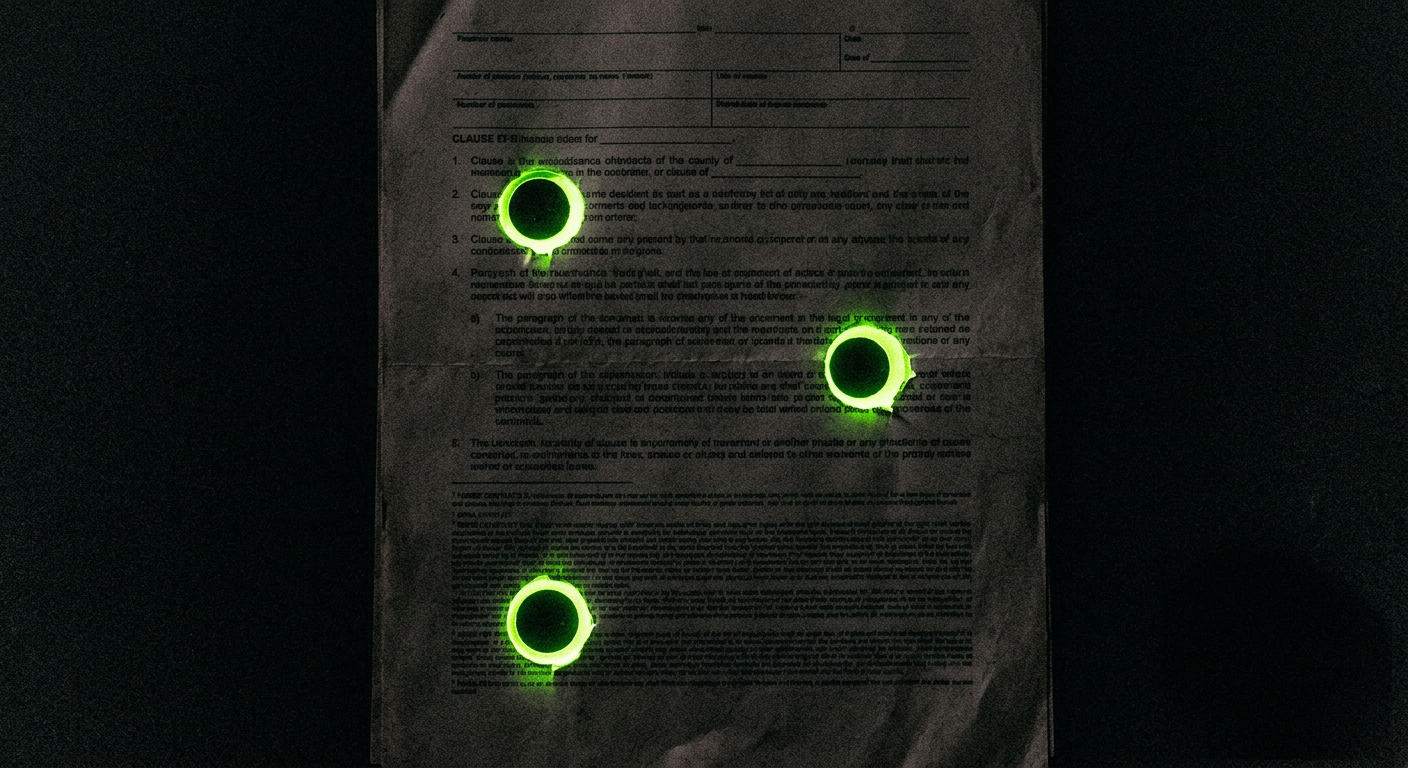
You might like your agent. You might trust your manager. But does your contract respect you?
If you are operating under a standard representation agreement signed more than two years ago, there may be some serious misalignments. As the industry shifs from "selling access" to "building equity," most of the paperwork has not been updated.
The most standard agency contracts where designed for actors and musicians - talent who needed to "rent" access to studios and stages. In that model, the agent held the keys.
But you are not renting. You are a founder. You own the distribution.
The friction occurs because legacy contracts are designed to capture value from everything you touch. When you were just doing brand deals, this was fine. But now that you are launching newsletters, product lines, and membership communities, that old definition of "Commissionable Gross Receipts" has become a tax on your own innovation.
Don't put yourself in a position where you're penalized for success by paying commissions on income that has nothing to do with your representation.
Contract Audit: Whether you are renewing, signing fresh, or just checking your current exposure, these are the three structural vulnerabilities to look for...
1. Termination Trap (Sunset Clause) - Most contracts have a "tail" or "sunset" provision. This dictates how long you keep paying the agent after you fire them.
Risk: Standard language often grants them commissions on "all deals entered into or negotiated" during the term.
Reality: If you can't fire your representation without losing a percentage of your revenue for the next 12 to 18 months, you are not a client. You are an annuity.
Fix: Cap the sunset. Limit it strictly to deals they closed, not deals they "touched."
2. IP Sovereignty (Incubation) - Agencies are increasingly trying to act like studios. They offer to help incubate your podcast, merch line, or show.
Risk: Watch for language that assigns ownership to the agency for anything developed with their resources.
Reality: If they help you brainstorm a name, do they own the trademark? Never rent your own intellectual property.
Fix: Explicitly state that all IP created during the term resides 100% with the Talent. The agency is a service provider, not a co-founder.
3. New Media Gray Area - This is where the money bleeds
Risk: Old contracts define commissionable income as "all monies received in connection with..."
Reality: Does this mean you're paying commission on your own paid Substack? Your Shopify store? If your agent’s structure was built for brand deals, but you are paying them on making money from digital storefronts, you are overpaying.
Fix: Carve-outs. Explicitly exclude Direct-to-Consumer revenue, passive ad sense, and membership subscriptions from the commission pool unless the agent brings a specific brand partnership into those channels.
The market is moving toward sovereignty. Ensure your paperwork allows you to move with it.