Don't Sign a Lease Until You've Sold Out a Pop-Up
The jump from "I want a space" to a commercial lease skips every validation step that keeps businesses alive.
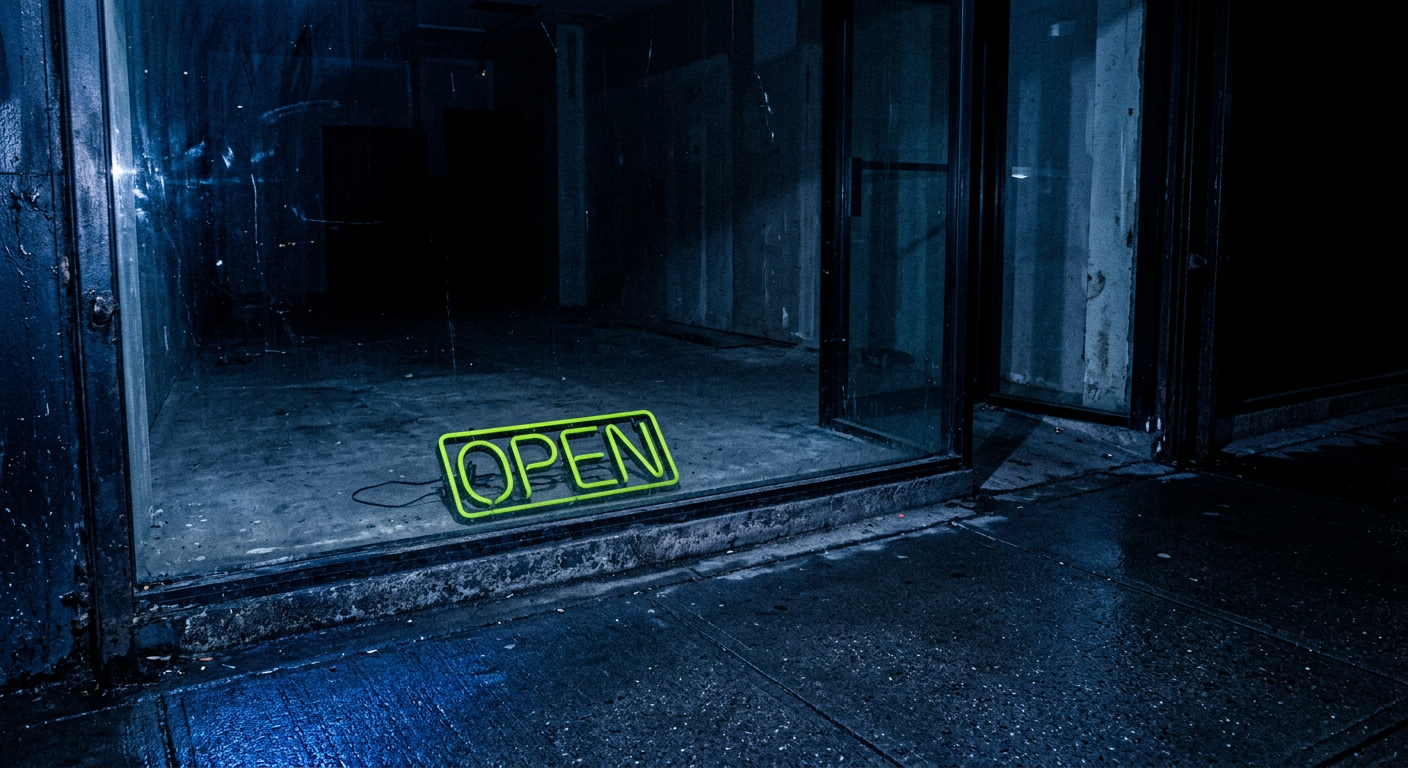
A 3-year lease doesn't care whether your content performs this month.
The fantasy goes like this: you've built an audience, the brand is strong, and now you want a physical presence. A studio. A cafe. A merch showroom. A content house. Something you can touch, something with your name on the door.
The fantasy is fine. The execution order is where people get hurt.
A commercial lease is the heaviest fixed cost a creator business can take on. It doesn't flex with your revenue. It doesn't pause when a brand deal falls through or when you take a month off to avoid burnout. It's a legal obligation that arrives on the first of every month regardless of how your last video performed. For a business model that already struggles with lumpy, unpredictable income, bolting on a fixed real estate commitment is pouring concrete shoes on a swimmer.
The creators who get this right don't start with a lease. They start with a pop-up. A weekend activation. A temporary studio sublet. A shared space. They test whether the physical concept works before they sign a document that obligates them for 36 months. Because the question isn't "would a studio be cool?" The question is "will this space generate enough value (revenue, content, community, press) to justify $4,000 to $15,000 a month in rent, utilities, insurance, and buildout costs?"
Most creators who jump straight to a lease are buying a fantasy with operating capital. And the ones who test first with temporary formats learn something critical: sometimes the pop-up IS the product. The scarcity and urgency of a limited-time physical experience can generate more buzz and revenue than a permanent location that becomes invisible after six months.
1. Pop-Up First - Before signing anything, run a physical activation for a weekend or a week. A temporary retail space, a one-day studio open house, a merch pop-up at an event. Measure traffic, revenue, content output, and press coverage. This is your proof of concept, and it costs 1% of what a bad lease costs.
2. Break-Even Math - Calculate the total monthly cost of the space (rent, utilities, insurance, buildout amortized over the lease term, staff if needed). Then ask: what specific, measurable revenue will this space generate each month? If the answer depends on "it'll attract brand partnerships" or "it'll be great for content," those aren't numbers. Those are hopes. Run the math until it's boring.
The right space will still be available after you've proven the concept. And if it isn't, a better one will be.